
Is IPTV legal in South Africa? The short answer is that IPTV technology is legal, but what you watch has to be properly licensed. This article explains the difference in plain language and how to protect yourself. It is general information, not legal advice.

In short: IPTV (Internet Protocol Television) is a delivery technology, while broadcasting in the country is regulated by ICASA. So when people ask “is IPTV legal in South Africa?”, the real question is whether the content is licensed.
IPTV (Internet Protocol Television) sends TV over an internet connection instead of a dish or aerial. Many legitimate services use it, including broadcasters, telecoms and streaming platforms. The technology is neutral. The legal question is about the content.
IPTV is generally lawful when the provider has the rights to distribute the channels and programmes it sells, through licences from the rights holders. Broadcasting and content distribution in South Africa also operate within the regulatory framework overseen by ICASA.
Problems arise when a service offers copyrighted channels, sport or films without permission from the rights holder. Under South African copyright law, distributing or communicating protected content without a licence can infringe copyright. Broadcasters and rights holders actively pursue piracy, and there have been enforcement actions in the market.
| Item | Legal status |
|---|---|
| IPTV technology and player apps | Legal to use |
| Licensed channels from authorised providers | Legal to watch |
| Unlicensed copies of protected channels | May infringe copyright |
Programmes, sport and films are protected works. A rights holder, such as a broadcaster or a league, decides who may distribute them, in which country and on which platforms. Those rights are often sold separately for each territory and for each type of platform. This is why a channel can be legal to watch on one service and not on another, even when the picture looks identical.
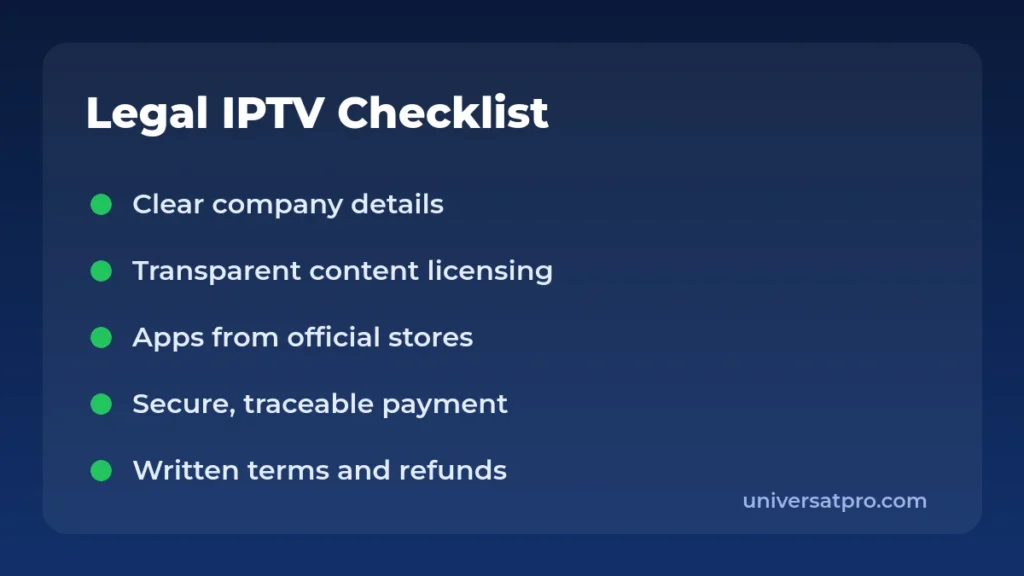
A transparent provider should be able to answer simple questions without avoiding them:
If the answers are vague, or you receive no answer at all, treat that as a warning. See also our IPTV subscription guide for what to compare before you pay.
Beyond the legal question, there are practical risks. Unlicensed services can disappear without notice, which means you lose the money you paid. Fake apps and pages can contain malware, and some collect your payment or personal details. Install apps only from official stores or from sources you trust, and avoid entering banking details on pages you cannot verify.
For must-watch matches, the safest choice is the official rights holder, which offers its own apps and web players. This is especially true for big events, where a service that fails during the match costs you the most. For rugby specifically, see our guide on how to watch rugby live online in South Africa.
Player apps only play whatever playlist you load. The app is not the issue. The source and licensing of the playlist is. See our guide to choosing an IPTV service and compare IPTV providers.
The technology is legal. A service is lawful when it has the rights to the content it provides.
Enforcement mostly targets sellers and distributors, but unlicensed content carries legal and security risks. Choose transparent providers.
Yes. It is a player app. What matters is the playlist you load into it.
Look for company details, clear terms, a working support channel and honest answers about licensing.
A trial is a sales method, not a legal status. The same licensing questions apply to the content in the trial.